Home Networks Stations Routes Travel Tips

Travel Tips & Planning

Everything you need to know before boarding — from purchasing passes and using IC cards to navigating station etiquette and seasonal travel advice.

Essential Knowledge

Your Complete Rail Travel Guide

01

Get an IC Card First

The very first thing you should do upon arriving in Japan is purchase an IC card (Suica or PASMO at major airports and Tokyo stations). Load it with ¥2,000–¥5,000 and use it for virtually all trains, metros, and even convenience store purchases throughout your trip.

Priority Step
02

Understand the Fare Structure

Japanese rail fares are distance-based. Always tap in at the entrance gate and tap out at the exit — the correct fare is automatically deducted. If you tap out without enough balance, top up at any "fare adjustment" machine near the exit gates before leaving.

Finance
03

Train Types and Speed Classes

Within a single line, multiple train types run — from Local (各駅停車, stops at every station) to Rapid (快速), Express (急行), and Limited Express (特急). Faster trains may require supplementary fare. Platform signs show which type each arriving train is.

Navigation
04

Reserved vs Unreserved Seats

Shinkansen and limited express trains have both reserved (指定席) and unreserved (自由席) carriages. Reserved seats guarantee you a specific seat; unreserved carriages are first-come, first-served. During peak travel periods (Golden Week, Obon, New Year), always reserve in advance.

Planning
01

Japan Rail Pass — Is It Worth It?

The JR Pass covers most JR trains including Shinkansen (except Nozomi and Mizuho on the Tokaido/Sanyo). Calculate your expected journeys beforehand — if you're doing Tokyo–Kyoto return plus a few regional trips, a 7-day pass often pays for itself handsomely.

Value
02

Regional Passes for Specific Areas

For focused travel in one region, area passes like the JR Kansai Pass, Hokkaido Rail Pass, or Kyushu Rail Pass often offer better value than the national JR Pass. They're also available for shorter durations (2–4 days).

Savings
03

Buy JR Pass Before Arrival

The standard Japan Rail Pass must be purchased outside Japan — it's not available for sale domestically. However, since 2023, a domestic version is available in Japan at a higher price. Plan ahead and purchase before your trip to save significantly.

Important
04

Making Seat Reservations

With a JR Pass, seat reservations are free of charge and can be made at any JR ticket window (みどりの窓口 — the "Green Window"). You can also use the newer automated ticket machines with English language support. Reserve popular Shinkansen seats 1–2 months in advance during busy seasons.

Reservations
01

Silence is Golden

Talking on mobile phones in train carriages is considered rude. Conversations should be kept at a low volume. On Shinkansen, there are sometimes designated phone call areas in carriage vestibules if you need to make a call during travel.

Social
02

Stand in Line, Board Orderly

Platform markings show exactly where train doors will stop. Form a neat queue on either side of the markers and wait for passengers to exit completely before boarding. This system is universally followed and makes boarding remarkably efficient.

Boarding
03

Priority Seating

Silver or blue-marked priority seats (優先席) near carriage doors are reserved for elderly passengers, pregnant women, people with disabilities, and passengers with young children. Offer your seat proactively and disable your phone's wireless when sitting in these areas.

Courtesy
04

Eating on Trains

On local and express trains, eating is generally avoided. However, on long-distance Shinkansen journeys, eating Ekiben (station boxed meals) is completely accepted and encouraged — it's a beloved part of Japanese rail culture. Bring a bento for any journey over 1.5 hours.

Culture
01

Google Maps — Surprisingly Reliable

Google Maps has excellent integration with Japan's public transit data and handles complex multi-line transfers accurately, including train types, fares, and platform numbers. It works offline if you download the region map in advance.

Navigation
02

Japan Official Travel App

The Japan Tourism Agency's official app provides transit guidance, tourist attraction information, and multilingual audio guides for major destinations. Particularly useful for off-the-beaten-path regional travel where English signage may be limited.

Official
03

Hyperdia — The Timetable Expert

Hyperdia is the go-to timetable app for Japan railways, used by both locals and tourists. It provides detailed departure/arrival times, platform numbers, transfer walking times, and fare breakdowns for any combination of routes in Japan.

Timetables
04

Mobile Suica — Tap Your Phone

iPhone and Android devices support Mobile Suica, allowing you to use your smartphone as an IC card via NFC. Available to international visitors through the Wallet app — load yen with an international credit card and tap to travel seamlessly.

Technology
Rail Passes

Choose the Right Pass

Japan offers a wide variety of rail passes for tourists. Here's a summary of the most popular options for different itinerary types.

Nationwide
Japan Rail Pass

The all-in-one pass for travellers crossing multiple regions. Best value for journeys spanning three or more regions of Japan.

  • All JR Shinkansen (exc. Nozomi/Mizuho)
  • All JR local and express trains
  • JR Buses and some JR Ferries
  • 7, 14, and 21-day options
  • Ordinary and Green Class available
From ¥50,000
Kansai Region
Kansai Area Pass

Ideal for exploring Osaka, Kyoto, Nara, Kobe, and Himeji on JR lines within the Kansai region. Available in 1–4 day versions.

  • JR lines in Kansai region
  • Includes Haruka Airport Express
  • Unlimited local trains in zone
  • 1, 2, 3, and 4-day options
  • Purchasable in Japan
From ¥2,400
Focused Travel
Hokkaido Rail Pass

For extended exploration of Hokkaido's vast landscapes, including Sapporo, Hakodate, Furano, and Abashiri on JR Hokkaido lines.

  • All JR Hokkaido lines
  • Flexible 3, 5, and 7-day options
  • Includes Hokkaido Shinkansen
  • Seat reservations included
  • Great for winter rail travel
From ¥12,000
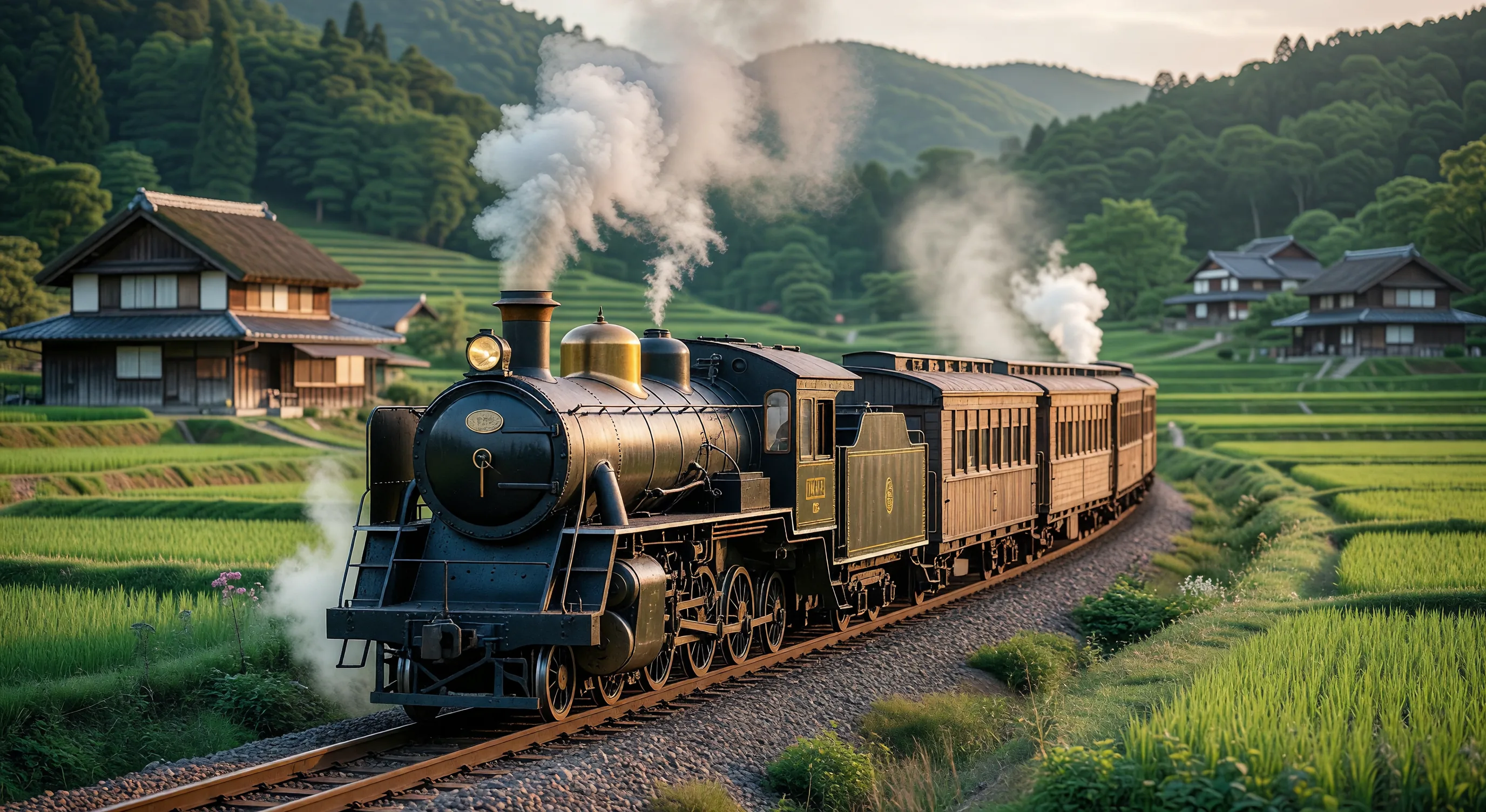
Heritage steam train in Japan

Riding Japan's Heritage Railways

Beyond the bullet trains, Japan preserves a remarkable collection of heritage and steam railways. From the Oigawa Railway's steam locomotives to Kyoto's historic trams, these routes offer a window into Japan's railway history.

The Oigawa Railway in Shizuoka Prefecture runs one of Japan's most active steam locomotive services, with coal-fired engines pulling vintage passenger carriages through mountain valleys. Reserve seats well in advance — these trains sell out regularly.

Explore Scenic Routes
When to Travel

Seasonal Travel Guide

Japan's rail travel experience changes dramatically with the seasons. Each season brings unique landscapes and travel considerations.

🌸

Spring

March – May

Cherry blossom (sakura) season brings Japan's most iconic railway scenery. Book Shinkansen and scenic trains 2–3 months ahead — the busiest travel period of the year.

🌿

Summer

June – August

Rainy season in June, then hot summers perfect for Hokkaido. Mountain routes are fully open, and festival trains operate on scenic regional lines. Book early for Obon period.

🍂

Autumn

September – November

Autumn foliage (koyo) rivals spring for scenic beauty along mountain railway routes. The Nikko, Matsushima, and Arashiyama routes are particularly spectacular in October-November.

❄️

Winter

December – February

Snow transforms Hokkaido and mountain routes into magical winter wonderlands. The Tohoku Shinkansen provides reliable access during heavy snow periods. Ski trains are popular.

FAQ

Frequently Asked Questions

Can foreigners use IC cards like Suica?

+
Yes — foreign visitors can purchase and use IC cards at major airports and stations. Since 2023, a "Welcome Suica" specifically for tourists has been available, valid for 28 days without a deposit requirement. The card works on nearly all transit in Japan and at many convenience stores.

How far in advance should I book Shinkansen seats?

+
For standard travel periods, 1–2 weeks ahead is usually sufficient. During peak periods (Golden Week late April–early May, Obon mid-August, New Year late December–early January), book 1–2 months in advance. JR Pass holders can make free seat reservations up to 1 month before travel.

Is it possible to travel Japan entirely by train?

+
Absolutely — and it's the recommended way to travel. Japan's rail network reaches virtually every significant destination, from Hokkaido in the north to Kagoshima in southern Kyushu. Many travellers complete comprehensive multi-city itineraries using only trains, finding it more comfortable and scenic than flying.

What happens if I miss my reserved Shinkansen?

+
With a JR Pass, you can generally board the next available Shinkansen in an unreserved car without extra charge. If travelling with a paid reserved ticket, you may be able to exchange it at the ticket window before departure. Contact station staff for assistance — JR staff are generally very helpful with international tourists.

Are there luggage storage options at stations?

+
Yes — all major stations have coin-operated lockers (コインロッカー) ranging from small to extra-large sizes. For larger luggage, many stations have staffed cloak rooms. Additionally, services like "Takkyubin" (luggage forwarding) allow you to send suitcases ahead to your next hotel overnight, freeing you to travel light on the trains.